
Dentures: Restoring Smiles and Confidence

A time-tested solution that restores smiles, enhances functionality, and renews self-confidence for individuals dealing with missing teeth. Dentures have evolved over the years to provide patients with a comfortable and natural-looking solution for tooth loss.
The Significance of Dentures
Dentures are removable prosthetic appliances that replace missing teeth and the surrounding tissues. They come in various forms, including full dentures for those missing all teeth and partial dentures for those missing only a few teeth. Dentures offer several benefits that contribute to improved quality of life.
Why Dentures Matter?
Dentures provide numerous advantages, making them an appealing choice for many patients:
- Enhanced Appearance. Dentures restore the appearance of a complete smile, improving facial aesthetics and boosting self-confidence.
- Improved Chewing and Speech. Dentures restore the ability to chew a wide range of foods and speak clearly, which may be compromised by missing teeth.
- Affordability. Dentures are often more cost-effective than other tooth replacement options, making them accessible to a broader range of patients.
- Quick Solution. Dentures can be created relatively quickly, providing a timely solution for those seeking immediate restoration.
How do dentures work?
Dentures are removably attached dental appliances that can be worn in one or both jaws to replace missing teeth. Dentures are made by dental technicians out of materials such as acrylic, resin, nylon, metal, and porcelain.
What are the Types of Denture?
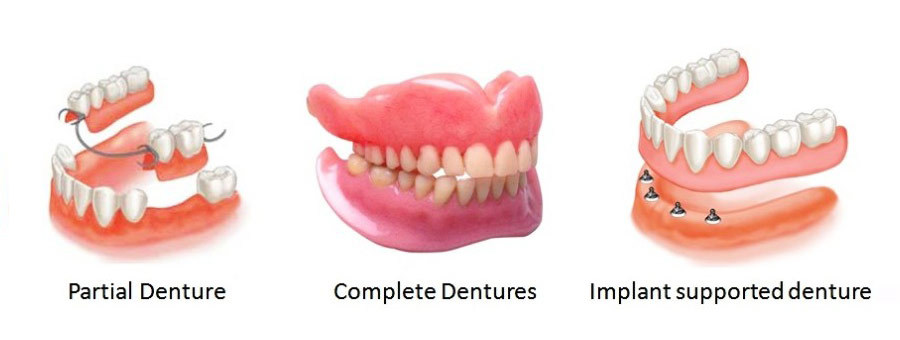
Dentures come in various forms to suit different needs:
- Full Dentures. Full dentures replace all teeth in the upper or lower jaw. They rest on the gums and are held in place by suction or denture adhesive. This device, which is also known as a complete denture, replaces a whole arch of missing teeth. A full denture rests on top of your gums and is supported by your lower jawbone ridge or palate (the roof of your mouth).
- Partial Dentures. Partial dentures are used when some natural teeth remain. They attach to the remaining teeth with clasps or precision attachments.
- Implant-Supported Dentures – These dentures are secured in place with dental implants, providing added stability and reducing concerns about slipping or movement.
- Immediate dentures. Before a person can wear dentures, they occasionally need to have teeth extracted. You wear an instant denture immediately following extractions. Immediate dentures are occasionally transient devices.
- Implant-retained dentures. Secured to dental implants rather than your gums and jawbone ridge. In order to replace missing tooth roots, dentists insert small, threaded posts called dental implants into the jawbone. Implant-retained dentures are detachable like conventional dentures.
What happens during a denture consultation?
Your mouth, including your jaws, gums, and any remaining teeth, will be examined by a dentist. Additionally, they will take dental X-rays to measure your jawbone’s thickness
Your dentist will go over your denture alternatives with you if they decide you’re a candidate for dentures. The ideal denture for you will rely on a number of variables, including:
- The number of teeth you are missing.
- How long you have been without teeth.
- Which type of appliance—removable or not—you favor.
- How big and how dense your jawbone is.
- The alignment of your lower and upper jaws.
- Your particular tastes.
How are Dentures made?
Making a denture involves a number of steps:
- Taking impressions in the mouth. Your upper and lower jaws’ impressions will be taken first by your dentist. Your gums and any surviving teeth are included in this. A preliminary and a final impression are frequently required.
- Constructing a dental model. Your impressions will be forwarded to a dental lab by your dentist. Your dental impressions will be used by a dental professional to create a stone duplicate of your mouth. This model will be used to make your personalized denture.
- Making the denture unique. Starting with wax registration blocks, construct your denture. The dental specialist can install the fake teeth more precisely with the aid of these blocks. The technician will next construct the structure out of a variety of materials (such as acrylic, nylon, or resin).
What are the drawbacks of Dentures?
Dentures, particularly classic removable dentures, are not without difficulties. For instance, many people who wear traditional dentures lament how their devices move, wobble, or fall out of position while they speak or chew. Additionally, tooth loss causes your jawbone to gradually decrease, which causes face collapse (such cheeks that are sunken in).
How much time does it take to adjust to wearing Dentures?
Each person has a unique response to this query. To become adjusted to your new dentures, it may take a few weeks or even months. Remember that in order to get the fit you want, you might need to make multiple changes within the first few weeks.
What are the benefits of Dentures?
Numerous advantages of dentures include:
- Enhanced chewing efficiency
- Increased visual impact.
- Enhanced verbal performance.
- Enhanced nutrition (as a result of better chewing).
ABC Smiles Dentistry Cosmetic Services
Get In Touch With Us

Call us anytime
P: 732 99-SMILE (997-6453)
F: 848 777 9770
Book An Appointment
Book a visit to ABC Smiles Dentistry, simply fill out the form below and we will contact you back regarding the intervention you require.